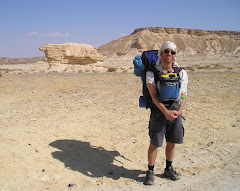
"Then it dawned upon me – yes, Yinchuan! this place i (and 99% of you) never heard of, capital of a lost kingdom up in the north. With only one million inhabitants, there is no mistaking about this place: it’s a village, and therefore my next destination."
I wrote these (unpublished) lines almost a month ago, back in the much bigger as expected Xi'an. Now, before I am leaving Yinchuan, i feel it would do injustice to this city not dedicating writing about it. Well, Yinchuan is the small (China-wise) and big (desert-wise) capital of the far-off tiny province\autonomy of Ningxia, just on the brim of the giant, empty province of Inner Mongolia.
Two months ago, still deep in the Beijing jungle, i presented in my Hebrew blog about 5 places I have chosen as potential places for "part B of my time in China - settling-down a bit": Beijing, Qingdao, Kaifeng, Xi’an and Yinchuan (of which I only inadvertently heard). I never thought i would made it to all of them, but each one seemed good, yet none perfect, and my indecisiveness and stubbornness brought me always forward.
Beijing has many foreigners, culture, history, high prices, subway-system and the feeling of a world-town; Qingdao has history, beautiful beaches, great buses, a nice foreign community, a sweet hostel and a lot of style; Kaifeng has Jews, a nice university, very cheap prices, history, old-China feeling; Xi’an had another sweet hostel, many foreigners, history, and a huge building boom.
Yinchuan has none of the above. It’s just a simple, nicely developing city in the middle of nowhere China, with great air and good people. But i was wrong in what i wrote above - it is a city for all its worth. Many people, wide avenues, markets, a skyscraper or two, big hotels, malls (don't worry, folks, the Chinese buying spray is still going on, the world is saved!) and only Chinese. Almost no foreigners come here, and the ones that do all retell their path to here in a semi-mystical tone, as if it was a scene out of “Close Encounters of the 3rd Kind”. Something led us here.
(Something weird happens, by the way, when one spends three weeks roaming the streets and seeing only Chinese: the contrast is gone, and people don't really look Chinese anymore)
Back to the fivesome. The average modern Chinese, who dislikes small towns and yearns for dazzling touristic places, would have rated these 5 cities as follows: 1. Beijing, 2. Xi’an 3. Qingdao, 4. Yinchuan and Kaifeng (regarding the latter, there was mostly astonishment when people heard i love it enough to want to live in it. i can imagine how would people react to the former). At least at this period of my travels, i'd have rated it exactly upside upside-down, maybe with Beijing a bit above.
But they are all good, and offer their share of living. And indeed, as i made it here, knowing my road ends here and it's decision time, every one of the five was back on the table, an alluring possibility. That's why i didn't right a lot recently, there was really not much going on, other than endless calculations and deliberations. i hate it when i become "that guy".
But now i'm set - it's back to Kaifeng for me. I think. Pretty much sure.
Thursday, April 16, 2009

Wednesday, April 15, 2009
China-man (or: it's a wonderful China - part 3 and last)
你是哪国人?(direct translation: “you are which country man?”).
No matter how heavy the accent or weird the dialect, foreigners in China always understand this question, simply as it is usually the first one thrown at them.
(actually, it is almost always on top of the list at any international encounter. This leads many to believe that nationality is an obvious matter. Yet if I let people guess mine, even westerners rarely say “Israel” within the first 10 guesses)
Anyway, as someone sick of consistently answering 以色列 (Israel) to this question, I occasionally answer 中国人! (China-man!). That’s a old and lame joke, which is used by western travelers all over the “south of the world”, usually (well, in India at least) rewarded with a gust of healthy laughter. However, simple Chinese don’t react so straightaway. Maybe it's because they are not into jokes on first acquaintance, but also because their definition of China-man might be pretty loose, they don't know how to face my answer.
不可能! (this can’t be!) exclaims the old lady running the restaurant I came into, and adds something about my face not looking Chinese.
可以吧,新疆人 (oh, it can be. he’s Xinjiang man), tells her one of her waiters. She was appeased.
I don’t exactly know why, but this makes me feel good. These people for example originally come from Sichuan, also a relatively far and different province. Yet their life is so simple and their country so vast, that they can still believe that the green-eyed light-haired person in front of them is a Chinese.
It is no coincidence that Chinese are the biggest people in the world. In stark contrast from their neighbors to the east (or from their "neighbors" in the Middle-East), they are very inclusive in their national perspectives. Even their foreign rulers – the Jurchens (Jin Dynasty), the Mongolians (Yuan Dynasty) the Manchurians (Qing Dynasty) – eventually got considerably assimilated, and defined themselves as Chinese. This is also reflected in today’s attitude, for better and for worse: for most Chinese, if you’re from Chinese descent, then you’re Chinese. If you are Uighur, Tibetan, Mongolian, Manchurian or any other minority on the premises – you’re not Han, but you’re Chinese.
And if you speak some Chinese, you are well on your way (no, that was just my heart wish speaking).
No matter how heavy the accent or weird the dialect, foreigners in China always understand this question, simply as it is usually the first one thrown at them.
(actually, it is almost always on top of the list at any international encounter. This leads many to believe that nationality is an obvious matter. Yet if I let people guess mine, even westerners rarely say “Israel” within the first 10 guesses)
Anyway, as someone sick of consistently answering 以色列 (Israel) to this question, I occasionally answer 中国人! (China-man!). That’s a old and lame joke, which is used by western travelers all over the “south of the world”, usually (well, in India at least) rewarded with a gust of healthy laughter. However, simple Chinese don’t react so straightaway. Maybe it's because they are not into jokes on first acquaintance, but also because their definition of China-man might be pretty loose, they don't know how to face my answer.
不可能! (this can’t be!) exclaims the old lady running the restaurant I came into, and adds something about my face not looking Chinese.
可以吧,新疆人 (oh, it can be. he’s Xinjiang man), tells her one of her waiters. She was appeased.
I don’t exactly know why, but this makes me feel good. These people for example originally come from Sichuan, also a relatively far and different province. Yet their life is so simple and their country so vast, that they can still believe that the green-eyed light-haired person in front of them is a Chinese.
It is no coincidence that Chinese are the biggest people in the world. In stark contrast from their neighbors to the east (or from their "neighbors" in the Middle-East), they are very inclusive in their national perspectives. Even their foreign rulers – the Jurchens (Jin Dynasty), the Mongolians (Yuan Dynasty) the Manchurians (Qing Dynasty) – eventually got considerably assimilated, and defined themselves as Chinese. This is also reflected in today’s attitude, for better and for worse: for most Chinese, if you’re from Chinese descent, then you’re Chinese. If you are Uighur, Tibetan, Mongolian, Manchurian or any other minority on the premises – you’re not Han, but you’re Chinese.
And if you speak some Chinese, you are well on your way (no, that was just my heart wish speaking).
Friday, April 10, 2009
Nice
“And you know something? Chinese are reeeeaaaly nice”
Before coming to China, I heard this sentence twice, with the same intonation letting out the same surprise of the speaker. As it is important for me to share with you a similar impression, i am hesitantly walking into this minefield of generalized discussion, just a few minor steps.
We all know Germans are accurate, Italians are boisterous
But after two months in China, I feel this cultural stiffness poorly represents most Chinese people (and especially my readers :). Everywhere I went, people were extremely open and helpful – inviting me to eat, showing me around, and just happy I was there (no, it’s not what you’re thinking – in most of the cases, they absolutely refused accepting my money). A few were Muslim, and didn’t have the slightest care about me being Israeli. At least to my impression, in inner-land China, inter-religious hatred is unimaginable. "here in China we all live together, in harmony".
Why are they nice to foreigners? It’s not as if they lack colonial past, and therefore bear no hard feelings. We are talking of one of the most humiliated countries of colonial times. Germany, Russia, the US, France, and of course – the British and Japanese Empires – everybody wanted their piece. Yes, many Chinese I met admittedly disliked Japan, in a way similar to the way some Israelis hate Germany. However, having traveled a bit with Japanese here, we were warmly accepted everywhere.
Maybe it's in the culture. Right now, for example, I am staying for a few weeks at the home of somebody I never met, a friend of a friend. Having heard I am coming to Yinchuan, she insisted that I pick up the keys for her mother’s apartment (as she was not in town), and has practically let a stranger into her house.
I am not here to make comparisons. People are nice all over the world. I bet you people in Kuwait, Greece, Ghana or Nicaragua could be as warm and welcoming. I know as a fact Israelis are. However, Chinese are not just another people, but the world’s largest. How can it be that almost nobody in the west knows their nature?
I wonder what’s to blame. Is it civilization gap? I guess; geographical distance? sure enough; the media? most probably; politics? you betcha. Maybe it is also the giant cities, Beijing and Shanghai, which are more alienated, yet serve as the front-window to China.
Or maybe it’s a new thing. Maybe, just like their state, so did the Chinese only began opening themselves up in the last decades, and devolved from a stiff and xenophobic society, to a welcoming one. And maybe it’s because I speak some Chinese.
Enough of this subject, these generalizations make me feel nauseous. Furthermore, I am quite sure I will be rewarded for this ethnic blabber with a negative experience, already in the coming days.
Actually, I already had it! More on that another time. In the meantime let me assure you: most Chinese are reeeaaly nice.
**********************
speaking of Japanese travelers, here are a few photos, especially from the bike-ride on the ancient walls surrounding Xi'an (magnificent), courtesy of Nori, who is already back in Tokyo for studies.
 no, we didn't really ride this thing (you can see how entertained we are from the idea). it was mostly for the sake of the picture.


Monday, April 6, 2009
the silver river (银川)
Long time no post. there hasn't also much to tell, but what there is lies in my paso-con (a Japanese abreviation of "personal computer". it would be English some day), and Yinchuan, the city where i am now, has turned to be a great place, yet failed so far in supplying me with precious wireless access.
****************
In the spirit of times, and bearing in mind we don't know where we're headed to, let me run some (only partially ampirical) financial numbers:
*A regular payment to a foreigner for one hour of English teaching in Yinchuan - 75-100 Yuan; 50-75 in Kaifeng, 100-200 in Beijing.
*An average rent for an apartment in downtown Yinchuan - 500-700 Yuan; 300-500 in Kaifeng; 3000-6000 in Beijing.
(technical break)
Yes, those of you who bothered to sum it up, got it right. Some 5 hours of work in Yinchuan or Kaifeng, and you might have earned your monthly apartment rent. If you are a restaurant goer (of the non-connosseur type, as yours truly), 5 more hours and you can forget about cooking for yourself. Not bad for one work day, and no wonder there is already a small society of happy and lumpy foreigners in China.
For those of you actually belonging to this society: sorry, i had to let this secret out. But hey - dinner's on me.
****************
In the spirit of times, and bearing in mind we don't know where we're headed to, let me run some (only partially ampirical) financial numbers:
*A regular payment to a foreigner for one hour of English teaching in Yinchuan - 75-100 Yuan; 50-75 in Kaifeng, 100-200 in Beijing.
*An average rent for an apartment in downtown Yinchuan - 500-700 Yuan; 300-500 in Kaifeng; 3000-6000 in Beijing.
(technical break)
Yes, those of you who bothered to sum it up, got it right. Some 5 hours of work in Yinchuan or Kaifeng, and you might have earned your monthly apartment rent. If you are a restaurant goer (of the non-connosseur type, as yours truly), 5 more hours and you can forget about cooking for yourself. Not bad for one work day, and no wonder there is already a small society of happy and lumpy foreigners in China.
For those of you actually belonging to this society: sorry, i had to let this secret out. But hey - dinner's on me.
Thursday, March 26, 2009
何でも良い
Here’s a small and insignificant proof that the world is getting smaller, and civilization gaps narrower. In the past, it could have taken some surprising minutes, sometimes even a pen and paper, in order for the non-Israeli in front of me to understand my middle-eastern funny sounding name. I was Zoha, Zala, Zara, Jua (India…), Zaha, Zora and even Zoe. These days, most people – well, especially non-Chinese – seem to get my name immediately. Some even go as far as asking me if I like cutting hair, and what do I think of Adam Sandler. Till now I have been captiously correcting them, but I guess there would come a time when I would just let it go. You don’t mess with a Zohan.
Tuesday, March 24, 2009
Medium rare
“No sports, no rock, no information, for mindless chatter – we’re your station!”
(the Simpsons' KBBL radio jingle)
Sometimes being a workless traveler slash ”freelance” student can be really tough. You don’t have any structure to work in. It’s almost 11 am, and I am still in my pajamas, struggling to find something else to read, some additional piece of data. When all is done, I resort, again and again, to the Israeli news, to acquire some new peace of data. Maybe a kindergarten using new techniques was opened in Tiberius, maybe there is another reportage about the building extension in the settlements, or (as I just saw today) a list of Israel’s “10 best falafels!”.
I first experienced it when I was living in Berlin – this adherence to the Israeli papers, first and foremost “Haaretz”. I am not alone. I have an Israeli friend who has been living for more than five years now in Berlin, and still, every time I saw him open the computer, he checks Haaretz. I guess we do it out of a mixture of boredom, genuine interest and routine – your fingers just slip over automatically, after you read your last e-mail.
On top of that is the society we come from and (on and off) live in. According to a research I have heard of during my studies, the Israeli society is unique in the huge disparity between the high amount of time citizens spend in acquiring news and discussing politics (and Israel is indeed a pretty interesting country to live in), and their negligible belief in their own ability to change the situation they so habitually consume. This sure explains a lot, and I won’t be surprised to find out the Palestinians take second place.
In a way, a similar disparity is reflected in almost all Israelis I know, especially in my circle of friends, who can be clearly distinguished between the ones who plunder these pages daily (usually people working with a computer. They check NRG and Ynet too), and the ones completely out of the loop.
Sure, it’s important for me as an Israeli and an activist to stay updated. Yet how can reading Haaretz daily help me? I usually recommend it to foreigners, it might really help them understand the situation. But for us natives, it’s simply the same stuff every day. It’s not that by reading it I get any smarter, get to know my country better. Most of it is simply politicians’ blabber, discouraging reports and maybe an occasionally enlightening yet worn-out commentary in between. The attention to what’s going on in the world which actually surrounds our small dark bubble might be increasing, now with the crisis and all, yet is still minor, some kind of back-cover amusement.
Well, now it’s over, I tell you! I am going to be an updated yet newsfeed-free Israeli. As long as nothing extreme happens (oh, it will) and as long as I am out of the country, I will just let the Zipis, the Bibis and the Libis do their thing. I hereby promise to open Haaretz only once a week (Friday, usually the time homesickness kicks in). The rest of the time, I will settle for Asahi shinbun, New-York times, China Times and Süddeutsche Zeitung. Who knows, maybe they got some middle-east section…
******************
this post was written about three weeks ago, yet I decided to wait with it, and see whether i can keep my promise. well, so far so good, and with nice results too. the scattered news i do get from Israel, especially from Netanyahu's never-ending and depressing coalition negotiations, make me even more determined.
(the Simpsons' KBBL radio jingle)
Sometimes being a workless traveler slash ”freelance” student can be really tough. You don’t have any structure to work in. It’s almost 11 am, and I am still in my pajamas, struggling to find something else to read, some additional piece of data. When all is done, I resort, again and again, to the Israeli news, to acquire some new peace of data. Maybe a kindergarten using new techniques was opened in Tiberius, maybe there is another reportage about the building extension in the settlements, or (as I just saw today) a list of Israel’s “10 best falafels!”.
I first experienced it when I was living in Berlin – this adherence to the Israeli papers, first and foremost “Haaretz”. I am not alone. I have an Israeli friend who has been living for more than five years now in Berlin, and still, every time I saw him open the computer, he checks Haaretz. I guess we do it out of a mixture of boredom, genuine interest and routine – your fingers just slip over automatically, after you read your last e-mail.
On top of that is the society we come from and (on and off) live in. According to a research I have heard of during my studies, the Israeli society is unique in the huge disparity between the high amount of time citizens spend in acquiring news and discussing politics (and Israel is indeed a pretty interesting country to live in), and their negligible belief in their own ability to change the situation they so habitually consume. This sure explains a lot, and I won’t be surprised to find out the Palestinians take second place.
In a way, a similar disparity is reflected in almost all Israelis I know, especially in my circle of friends, who can be clearly distinguished between the ones who plunder these pages daily (usually people working with a computer. They check NRG and Ynet too), and the ones completely out of the loop.
Sure, it’s important for me as an Israeli and an activist to stay updated. Yet how can reading Haaretz daily help me? I usually recommend it to foreigners, it might really help them understand the situation. But for us natives, it’s simply the same stuff every day. It’s not that by reading it I get any smarter, get to know my country better. Most of it is simply politicians’ blabber, discouraging reports and maybe an occasionally enlightening yet worn-out commentary in between. The attention to what’s going on in the world which actually surrounds our small dark bubble might be increasing, now with the crisis and all, yet is still minor, some kind of back-cover amusement.
Well, now it’s over, I tell you! I am going to be an updated yet newsfeed-free Israeli. As long as nothing extreme happens (oh, it will) and as long as I am out of the country, I will just let the Zipis, the Bibis and the Libis do their thing. I hereby promise to open Haaretz only once a week (Friday, usually the time homesickness kicks in). The rest of the time, I will settle for Asahi shinbun, New-York times, China Times and Süddeutsche Zeitung. Who knows, maybe they got some middle-east section…
******************
this post was written about three weeks ago, yet I decided to wait with it, and see whether i can keep my promise. well, so far so good, and with nice results too. the scattered news i do get from Israel, especially from Netanyahu's never-ending and depressing coalition negotiations, make me even more determined.
Saturday, March 21, 2009
the specials
It was definitely one of the most exciting moments in my travels, and my Jewish life. In a small, humble room, thousand of Miles away from the home, or from the Beijing and Shanghai synagogues, six Chinese and one Israeli were receiving the Shabat together. There was something both extremely encouraging and dispiriting in watching these few lonely Jews, that with one stroke of a Kipah seemed suddenly less like their fellow citizens, and much more like their “brothers”, the ones I met in Caracas, Indiana, Berlin, Jerusalem or Dharamsala. I thought of my mother, who would have doubtless burst in tears of excitement being there. Even I, while reading the blessing in Hebrew (the honor of the extinguished guest), got something caught in the eye. Heck, what are forty years in the desert in comparison with the wonder of a thousand in nowhere China?
But as far as I gathered (not much), the Jewish community of Kaifeng is today far from being a thriving community. Internal fighting about prestige, authentication and – of course – money, tore this rare flock apart. To that you can add the long years of being treated like some marvelous zoo animal, and the cold shoulder they have presumably been given from China, and from Israel’s governmental and Jewish authorities.
“I wanted to study in Israel”, told me a 20-something youth, the only one who could read and understand the words Sh’ma Israel on my Kipah. “The China government has no problem with people leaving the country. My petition for a visa was rejected on the part of Israel. At first there was no institution to accept us, then when that was found the government itself didn’t want us. Maybe now that the government is changing again.”
"I will be their savior!", I was flushed with inspiration during the service, "I will contact the Israeli Embassy, I will make Kaifeng my home, live amongst them, grow to speak their local dialect (which makes Mandarin feel as familiar and explicit as English), and will teach them Hebrew. Together, we will create a real, world-wide known community! One that people, especially Israelis and Jews, would love to come and be a part of. We will build a hostel for these travelers, maybe even a synagogue. If we built it, they will come!"
Quickly enough crept the anti-thoughts in: screw this. Finding out that you are different in China’s giant masses must be every young Han’s dream, on a par of winning the lottery. Yet instead of bringing them together, their uniqueness brought them more apart. Instead of acting together to sustain some kind of identity, some right of existence, they have succumbed to the old way of doing things – grudge, social accounting, connections, competitions, feuds. Guess being both Chinese and Jewish is simply too much tension and guilt-trips to withhold. Kaifeng has great potential, but they are grown-up people, and if they do not feel like pulling themselves together, I should not get myself all mixed-up. And anyhow, let them do their own thing. They have lasted for a thousand years, and can last another without a conceited well-wisher coming to tell them how to do things.
*********************
The final result is somewhere in between. But for now, this dilemma was spared. I just arrived to the big Xi'an, and may have left Kaifeng totally, in search of a place where I can get a Visa.
But as far as I gathered (not much), the Jewish community of Kaifeng is today far from being a thriving community. Internal fighting about prestige, authentication and – of course – money, tore this rare flock apart. To that you can add the long years of being treated like some marvelous zoo animal, and the cold shoulder they have presumably been given from China, and from Israel’s governmental and Jewish authorities.
“I wanted to study in Israel”, told me a 20-something youth, the only one who could read and understand the words Sh’ma Israel on my Kipah. “The China government has no problem with people leaving the country. My petition for a visa was rejected on the part of Israel. At first there was no institution to accept us, then when that was found the government itself didn’t want us. Maybe now that the government is changing again.”
"I will be their savior!", I was flushed with inspiration during the service, "I will contact the Israeli Embassy, I will make Kaifeng my home, live amongst them, grow to speak their local dialect (which makes Mandarin feel as familiar and explicit as English), and will teach them Hebrew. Together, we will create a real, world-wide known community! One that people, especially Israelis and Jews, would love to come and be a part of. We will build a hostel for these travelers, maybe even a synagogue. If we built it, they will come!"
Quickly enough crept the anti-thoughts in: screw this. Finding out that you are different in China’s giant masses must be every young Han’s dream, on a par of winning the lottery. Yet instead of bringing them together, their uniqueness brought them more apart. Instead of acting together to sustain some kind of identity, some right of existence, they have succumbed to the old way of doing things – grudge, social accounting, connections, competitions, feuds. Guess being both Chinese and Jewish is simply too much tension and guilt-trips to withhold. Kaifeng has great potential, but they are grown-up people, and if they do not feel like pulling themselves together, I should not get myself all mixed-up. And anyhow, let them do their own thing. They have lasted for a thousand years, and can last another without a conceited well-wisher coming to tell them how to do things.
*********************
The final result is somewhere in between. But for now, this dilemma was spared. I just arrived to the big Xi'an, and may have left Kaifeng totally, in search of a place where I can get a Visa.
Subscribe to:
Posts (Atom)